The History of Taxis: From Horse-Drawn Carriages to Modern Private Hire
The taxi has been a part of urban life for centuries. From the hired coaches of seventeenth-century London to the app-dispatched rides of today, the story of the cab is a story of cities, technology and the enduring human need to get somewhere.
If you've ever flagged down a cab without thinking twice about it, or tapped a button on your phone and watched a car icon move toward you across a map, you've participated in one of the oldest commercial transactions in urban history. The hired vehicle — someone else's transport, used briefly for a price — is an idea almost as old as cities themselves. What changed, over the centuries, was the technology carrying it forward. The instinct, and the need, remained exactly the same.
The Ancient Beginnings
The earliest recorded forms of hired transport appear in ancient Rome and Greece, where wheeled vehicles could be rented by the day for travel between cities. Roman law regulated the use of wheeled transport within city limits — private carts were often banned from Rome's narrow streets during daylight hours to ease congestion, a problem the city shares with its modern counterpart — which created a market for licensed, scheduled transportation services. The parallel to today's regulated private hire industry is closer than it might appear.
In ancient China, sedan chairs — enclosed platforms carried by bearers — functioned as an early form of urban hire vehicle, available to those who could afford them for journeys through city streets that wheeled transport couldn't easily navigate. Japan had a similar tradition in the form of the kago, a bamboo palanquin used for hire from the early Edo period. The underlying logic was consistent across cultures: if you needed to travel and didn't have your own means, someone else's could be rented.
The Hackney Coach — London's First Taxi Fleet
The specific ancestor of the modern London taxi appeared in the early seventeenth century. In 1605, the first horse-drawn hackney coaches appeared for hire on London's streets — four-wheeled, glass-windowed carriages drawn by a pair of horses, available to any paying passenger. By 1625, they were common enough in central London to cause complaints about traffic congestion, and in 1635 King Charles I issued an order limiting their numbers within a mile of the city.
The word 'hackney' itself likely derives from the French 'haquenée' — a type of ambling horse bred for comfortable riding — or possibly from Hackney in East London, where horses were grazed and hired out. Either way, the hackney coach became so embedded in London life that the term persisted long after the coaches themselves were replaced.
By 1654, an ordinance established a Fellowship of Master Hackney Coachmen, formalising the trade and setting early standards — essentially the first taxi licensing system in English history. The number of licensed hackneys was capped at three hundred, drivers required licences, and routes were loosely regulated. The infrastructure of modern private hire regulation had its prototype.
The Cabriolet and the Origin of 'Cab'
In the early nineteenth century, a lighter, faster vehicle began to compete with the established hackney coach. The cabriolet — a two-wheeled, one-horse carriage with a folding hood, originally from France — offered a quicker, cheaper journey for a single passenger. By the 1820s, cabriolets were common on London streets, and their name was quickly abbreviated in everyday speech to 'cab'. That abbreviation has survived everything since — the horse, the engine, the app — and remains in universal use today.
The hansom cab, patented by Joseph Hansom in 1834, refined the cabriolet into an elegant design that became the quintessential Victorian taxi. Low-slung, two-wheeled, with the driver perched at the back above and behind the passenger compartment, the hansom was fast, manoeuvrable and became the symbol of London street transport for the remainder of the nineteenth century. Arthur Conan Doyle sent Sherlock Holmes across London in one. Oscar Wilde rode in them. They were the Ubers of their day — ubiquitous, efficient, and mildly glamorous.
The Taximeter and the Birth of the Modern Taxi
The word 'taxi' itself arrives from a combination of 'taxe' (the French word for charge or tariff) and 'métron' (the Greek word for measure). The taximeter — a mechanical device that calculated the fare based on distance and time — was invented by Friedrich Wilhelm Gustav Bruhn in Germany in 1891 and commercialised by the Daimler firm in the following years. The first metered taxi fleet in the world appeared in Stuttgart and then Berlin in 1897, followed quickly by Paris and London.
The first motorised taxi service in London launched in 1903, operated by the Electric Cab Company using battery-powered vehicles, though reliability issues limited its success. Petrol-powered taxis took over rapidly thereafter, and by 1907 the Rational taxicab — essentially the first purpose-built London cab as we'd recognise it — was on the streets. Within a decade, the motor taxi had almost entirely replaced the horse-drawn hansom.
The London taximeter regulations that followed established the 'knowledge' — the test of London street geography that prospective taxi drivers must pass — and the licensing framework that evolved into what we know today as the Public Carriage Office, now operating under Transport for London.
The Twentieth Century — Regulation, Growth and the Black Cab
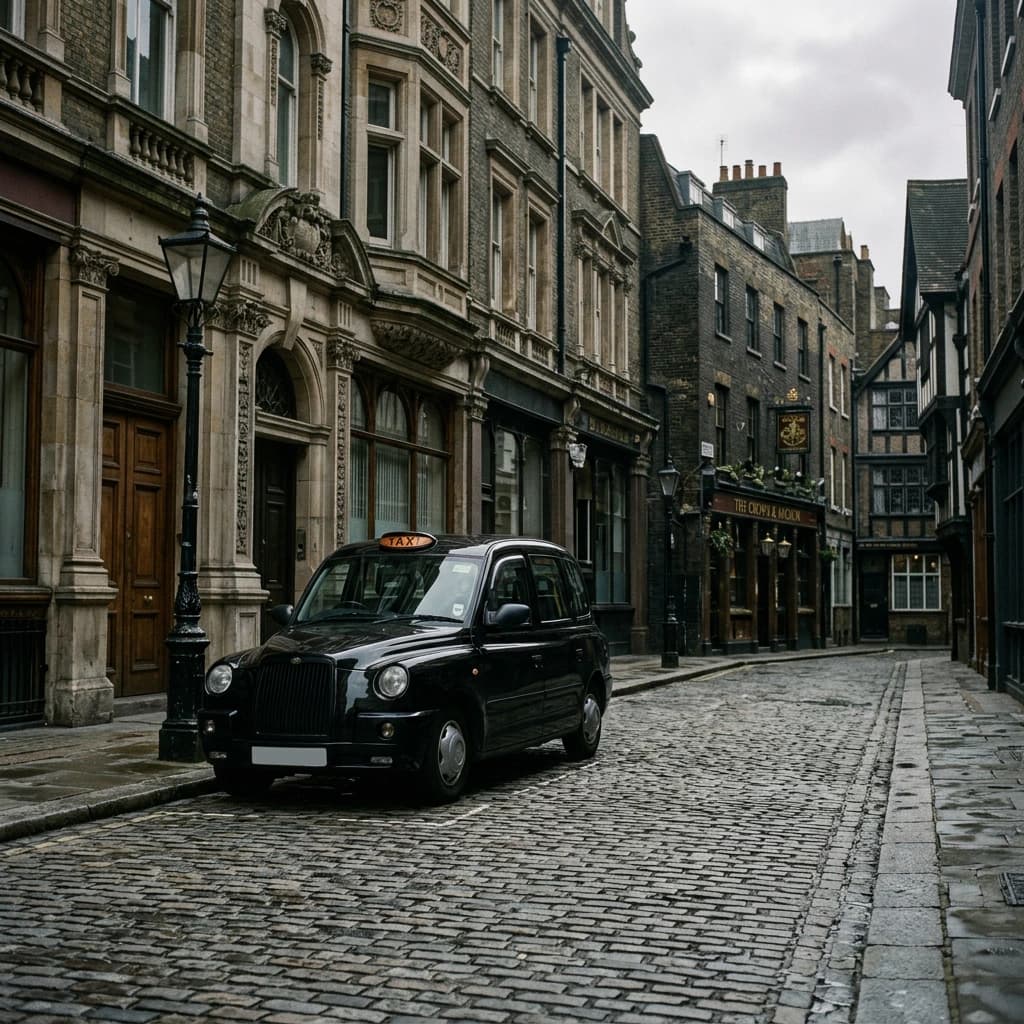
The interwar years saw taxi numbers grow rapidly across British cities. The distinctive black London cab — the Austin FX3, launched in 1948, later the FX4 from 1958 — became a cultural icon, its design shaped partly by the regulation requiring sufficient headroom for a passenger wearing a top hat. Whether that story is entirely accurate is debated, but the roomy, upright interior of the classic London cab remains one of its most recognisable features.
Throughout the twentieth century, the taxi trade in the UK operated under tight local licensing frameworks. Private hire vehicles — what we now call minicabs — were separately regulated, prohibited from being hailed on the street and required to be pre-booked. The distinction between licensed taxis (which can be hailed) and private hire vehicles (which must be booked in advance) remains a defining feature of the UK regulatory landscape today, and one that has shaped the industry's response to the arrival of app-based platforms.
Uber and the Digital Disruption
Uber launched in San Francisco in 2009 and arrived in London in 2012. Its impact on the taxi and private hire industry was immediate and significant. By connecting passengers directly with licensed private hire drivers through a smartphone app, it disrupted the dispatch model that licensed minicab companies had used for decades, and it brought a level of price transparency and booking convenience that the existing industry struggled to match.
The debate about Uber's place in the regulatory framework — whether its drivers required the same licensing as traditional private hire operators — played out across courts and regulators in multiple countries. In the UK, Uber eventually received a new operating licence from Transport for London in 2022, following periods of revocation and appeal, with a range of conditions attached. The legal and regulatory questions it raised about employment status, licensing and liability are still being worked through.
What the digital disruption made clear is that the fundamental appeal of the taxi — reliable, on-demand personal transport for a known price — is as strong as it has ever been. The interface changed. The underlying need didn't.
Private Hire in Kent — A Local Perspective
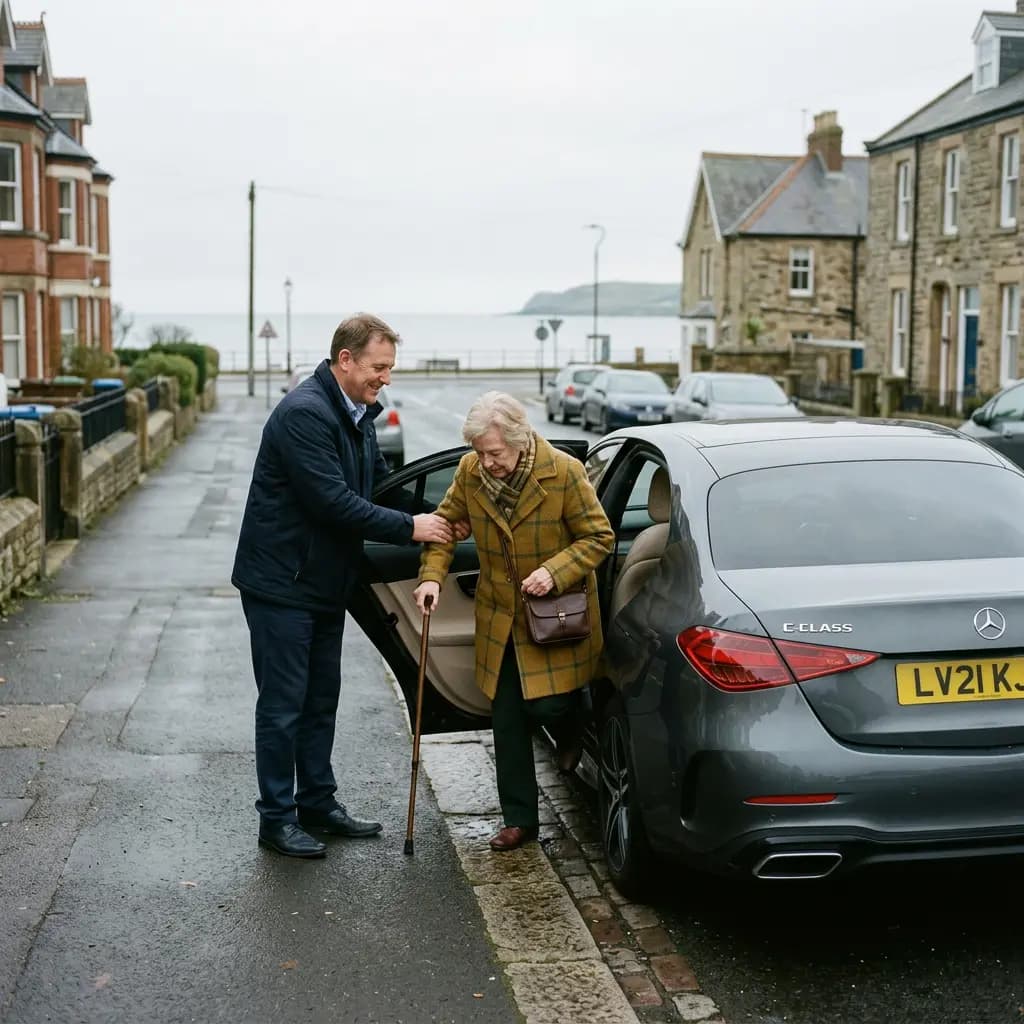
Outside London, the private hire trade has its own distinct character. In Kent, as across rural and semi-rural England, private hire operators serve communities that public transport doesn't reach efficiently — the villages between Canterbury and the coast, the roads connecting Deal and Dover, the early-morning airport runs that begin before the first train of the day.
The licensing framework in Kent operates through the local councils, each setting their own standards for vehicle condition, driver checks and insurance requirements. Professional operators — like Express Travel Kent — hold the relevant licences, maintain properly inspected vehicles, and carry passengers under conditions that protect both driver and customer. That regulatory framework, however different it looks from the hackney coach ordinance of 1654, serves the same basic purpose: ensuring that the person you hire to take you somewhere is qualified, legal, and accountable.
The history of the taxi is, at its core, a story about trust. The arrangement — you get in a vehicle driven by a stranger — requires a degree of confidence in the system around it. Licensing, regulation, professional standards: these are the mechanisms through which that trust is maintained. They've been evolving, in one form or another, since the Fellowship of Master Hackney Coachmen first set its rules nearly four hundred years ago.
If you need a reliable private hire service across Kent — whether to an airport, a station, a hospital, or simply from one part of the county to another — book with Express Travel Kent. We're part of a long tradition, and we take that seriously.
Ready to Travel?
Book your journey with Express Travel Kent — professional, punctual and always refined.
Book Now